













A dog’s mouth is connected to the rest of their body than most dog parents even realize. And bad breath is often the first sign this connection is under strain.
It’s easy to think you can treat smelly dog breath with a quick fix: a treat that can mask the odor. But that is just masking the symptom, not getting to the root cause – and it can have long-term implications, if left untreated. Research shows that periodontal disease, or often referred to as dental disease, doesn’t always stay in the mouth. The bad bacteria can enter the bloodstream and can impact the heart, kidneys, and liver, potentially taking years off of a dog’s life. Understanding why this happens — and how to prevent it — is what makes daily dental care worth the effort.
The short version
Periodontal disease affects the large majority of dogs — numerous bodies of research estimate that 80–90% have developed it by age three — and it goes far beyond stinky breath. When gums are inflamed, oral bacteria and inflammatory compounds can enter the bloodstream and travel to distant organs. Peer-reviewed canine studies tie the severity of gum disease to changes in the kidneys, heart, and liver, which is why veterinarians increasingly treat oral health as whole-body health
The smell is a symptom, not the story
Bad breath is the smoke; the fire is underneath. That stinky-breath moment most dog parents brush off is often the earliest sign of periodontal disease, and the disease rarely stays where it starts. When researchers examined dogs after death, they found a statistical link between the severity of gum disease and physical lesions in the heart and kidneys. The odor a pet parent notices, in other words, is an early warning about potential health issues happening much deeper in the body.
How trouble in the mouth becomes trouble elsewhere
The path from the mouth to the rest of the body runs through two doors, both of which open once gum disease sets in.
The first is the bloodstream. Once gums are inflamed and their thin protective barrier breaks down, bacteria that were only ever an oral problem can enter the blood and reach distant tissue — a process clinicians call bacteremia. One study measured this directly in dogs, drawing blood cultures before and after dental procedures across different stages of periodontal disease, and confirmed bacteria entering circulation. A small amount happens normally and clears quickly; the concern is the constant, repeated exposure that comes with ongoing disease.
The second is inflammation. Research on canine periodontal disease describes bacteremia, endotoxins, and cytokines produced during disease progression as capable of causing inflammation in organs like the liver, circulating body-wide and placing a low, chronic burden on the organs downstream. It isn’t one dramatic event, but a daily trickle the body must continually absorb.
When gum disease reaches the heart
The bacteria behind gum disease don’t just stay in the mouth. They’re drawn to the heart, where they can settle on the valves that keep blood moving correctly, especially the mitral valve. That can lead to an infection of the heart valves that makes it harder for the heart to do its job.
The numbers here are hard to ignore. One of the largest studies on this link followed nearly 120,000 dogs, and found that dogs with periodontal disease had over six times the risk of developing this heart valve infection compared to dogs without it, and that risk climbed the worse the gum disease got.
A separate study out of the University of Lisbon found something just as striking closer to home: more than half of the dogs with periodontal disease had signs of heart trouble — things like a new heart murmur or an irregular heartbeat — compared to only about 3% of dogs with healthy gums.
Veterinary literature continues to list heart disease among the whole-body risks tied to gum disease in dogs
The kidneys, and why senior dogs deserve extra attention
For older dogs especially, the kidney link is worth understanding. In one of the largest studies on the subject, following over 164,000 dogs, researchers found that the risk of kidney disease rose the more severe a dog’s gum disease became. Dogs also tended to show early signs of kidney strain in their bloodwork before any formal diagnosis was made.
The reasoning is intuitive: the kidneys are the body’s filtration system, so they process whatever is circulating in the blood. A steady load of bacteria wears on their delicate filtering units over time. Senior dogs face a compounded risk — kidneys that are already aging, alongside years of accumulated gum disease.
The liver, quietly on the list
The liver is less discussed but belongs in the picture. Because it processes so much of what moves through the blood, gum disease has been linked to liver inflammation in dogs. It can show up as changes in bile flow disruption, scarring around the liver’s portal areas, and elevated liver enzymes, the kind of chronic, cumulative strain that builds from ongoing bacteria and inflammation rather than a sudden illness.
This isn’t the dramatic, obviously-sick version of liver disease. It’s quiet, bloodwork-level strain that can build for years before a dog seems unwell. It’s one more organ absorbing the overflow from a problem that began at the gumline.
Why waiting for an eventual cleaning carries a cost
Dog parents often delay professional cleanings because of cost, concerns over anesthesia, and because gum disease is easy to overlook. It can look like nothing more than bad breath until real symptoms show up. But the research suggests the health impact doesn’t pause while the appointment waits. The organ associations above are tied to how severe and long-standing the disease is, which means every month it progresses adds to the low-grade bacterial and inflammatory load the body carries.
Professional cleanings remain essential and nothing replaces them; the pitfall is treating them as a once-a-year reset while nothing happens in between. Dog parents can help by keeping the mouth in balance continuously, so it rarely reaches the stages where organs are affected.
What pet parents can do right now
Prevention is where daily habits matter most, and the most effective approaches share a theme: they target the cause, an oral microbiome tipped out of balance, rather than only the visible plaque.
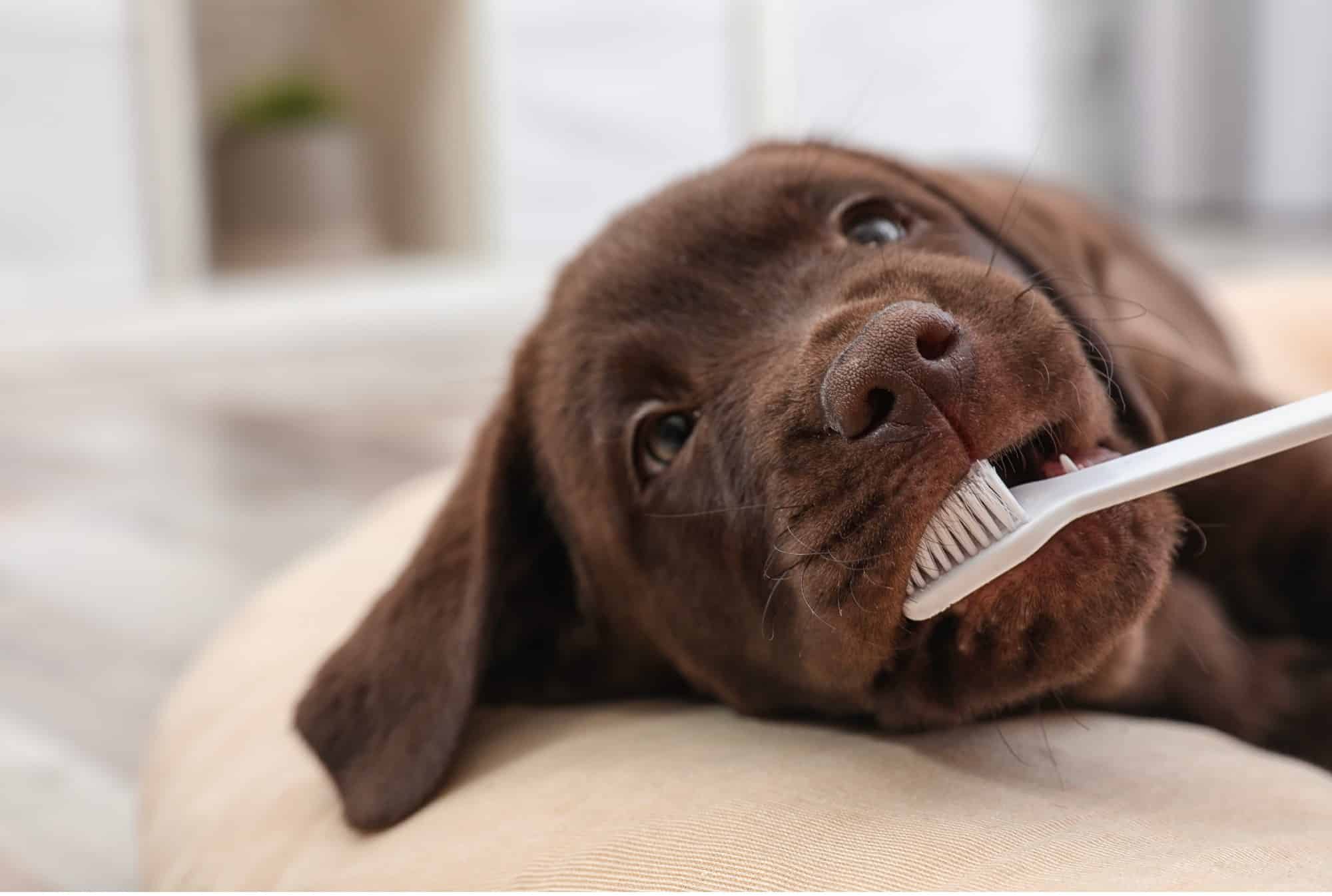
- Brush when possible. Regular brushing remains the gold standard for reducing plaque at the source.
- Build a routine that’s sustainable. A realistic daily habit outperforms an ideal one that gets abandoned. Besides aiming to brush your dog’s teeth every day, incorporate other oral care products into your dog’s routine.
- Keep up professional cleanings and exams. Home care supports whole-mouth health but works alongside veterinary care, not instead of it.
- Consider microbiome-first products. Rather than wiping out all oral bacteria with broad-spectrum antimicrobials, like chlorine dioxide, cetylpyridinium chloride, and chlorhexidine, look for products that support beneficial bacterial species while keeping harmful ones in check. Options like the Advanced Bye Bye Dog Breath Dental Powder use pre-, pro-, and postbiotics to help support a balanced oral microbiome, while the Bye Bye Dog Breath Dental Sticks combine daily chewing with a microbiome-minded formula.
A note on expectations: daily care is about reducing the bacterial burden and maintaining balance. It is not a cure for periodontal disease and not a substitute for veterinary treatment. Any product marketed as a complete solution is overstating what home care can do. The strongest results come from consistency paired with professional care.
Most of this research demonstrates a strong, repeated association between periodontal disease and organ changes rather than proof that one directly causes the other. In the necropsy work, for example, the timing between the dental disease and the organ lesions could not be established, and the relationship may run in both directions. Still, the bacteremia and inflammation mechanisms are well described and biologically plausible, and the associations hold across very large groups of dogs, which is why the veterinary community takes them seriously. “Strong association, causation still evolving” is the accurate framing.
Frequently asked questions
Is periodontal disease in dogs serious, or just cosmetic?
Serious. It affects the majority of dogs, causing bad breath, tooth loss, and painful mouth issues, and has been linked in canine research to changes in the kidneys, heart, and liver. The smell is best understood as an early signal of a whole-body process.
Can dental problems cause other health issues in dogs?
Research links gum-disease severity to organ-level changes, most clearly in the kidneys and heart, through two routes: bacteria entering the bloodstream and chronic inflammation spreading body-wide. It’s a strong association; causation is still being worked out.
Does gum disease affect a dog’s kidneys?
In a study of over 164,000 dogs, the risk of chronic kidney disease rose as gum disease grew more severe, alongside higher kidney markers in bloodwork. Senior dogs, whose kidneys are already aging, are considered especially vulnerable.
Can bad teeth affect a dog’s heart?
Yes. Periodontal bacteria can settle on heart valves and contribute to endocarditis, and studies following large populations of dogs have found periodontal disease linked to a significantly higher risk of heart-related conditions.
How does bacteria get from the mouth to the organs?
When gums are inflamed or a tooth is loose, the protective barrier breaks down and oral bacteria enter the bloodstream, while the damaged tissue also releases inflammatory compounds that circulate through the body.
At what age should pet parents start caring about a dog’s teeth?
Early. Periodontal disease affects most dogs and often appears in young adulthood, so daily care and checkups should start well before obvious tartar or strong breath appear.
Does daily dental care actually help?
Yes, especially when it targets the root cause rather than just the symptoms. Consistent home care that supports whole-mouth health and helps keep the oral microbiome balanced is a strong everyday addition to professional cleanings, not a replacement for them.